
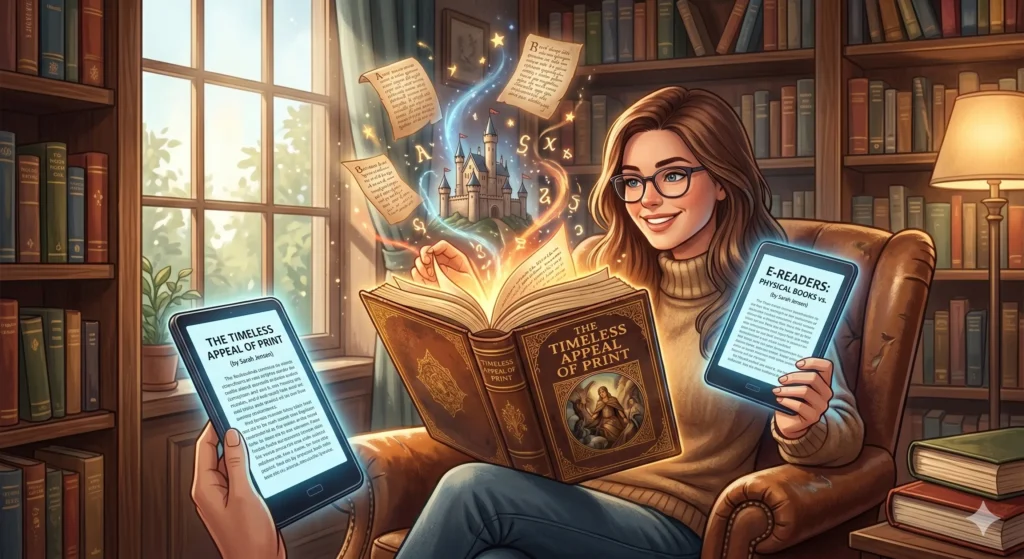
In the digital age, where everything from our groceries to our bank accounts exists on a screen, the printed book was supposed to become obsolete. E-readers, with their immense storage capacity, adjustable fonts, and built-in dictionaries, offer undeniable convenience. Yet, against all technological odds, physical books have not just survived; they are thriving.
There is a deeply sensory experience associated with reading a physical book that technology simply cannot replicate. It begins with the weight of the book in your hands and the tactile sensation of turning a textured paper page. The distinct smell of paper and ink—whether it is the crisp scent of a freshly printed hardcover or the comforting, vanilla-like aroma of a well-worn vintage paperback—triggers memory and emotion in a way that cold glass and plastic never will.
Physical books also serve as a vital escape from screen fatigue. Many of us spend eight hours a day staring at computer monitors, only to transition to looking at our smartphones in the evening. A physical book offers a rare, uninterrupted analog oasis. There are no pop-up notifications, no battery indicators, and no hyperlinks to pull you away from the narrative.
Finally, a physical bookshelf is a personal tapestry of a reader’s life. Displaying the books you have read, loved, and learned from is a way of showcasing your intellectual journey and personality. While e-readers will always have a place for travel and convenience, the physical book remains a cherished artifact, proving that sometimes, the traditional way is still the best way.